Monday, May 13, 2013

Article Featuring New Orleans Zen Temple

Dojo of the NOZT.
In 1988, Robert Livingston, a New York native who studied Zen in Europe for 10 years under the guidance of the Japanese teacher Taisen Deshimaru, established one of the first Zen centers in the South in a four-story building in the 700 block of Camp Street.

Livingston, who has been practicing Zen for 40 years, said New Orleans is a tough place to have a Zen center, as the city’s many festivals and celebrations keep people entertained.

Yet, the temple sees a steady stream of newcomers seeking a deeper understanding of their consciousness.
“People run into problems because they are so self-involved,” he said.

“In Zazen, you’re studying your brain, not with you mind but with your whole being. You learn to live more in the now,” he said.

For the rest of the article, see "Groups hope Dalai Lama visit will boost interest in meditation" by Dan Lawton of The Advocate, May 13, 2013.
For our connection to NOZT, read the About page.

Friday, April 26, 2013

Introduction to Practice - 11 May

Introduction to Practice - 11 May 2013
Visit the Calendar page for more information.

Monday, April 15, 2013

Richard Collins: Connecting the Arts and Humanities to Everyday Life

Richard Collins
Your CSUB, Winter 2013. Photo by Jennifer Burger.
Two and a half years ago, Dr. Richard Collins flew to California to interview for a deanship at CSU Bakersfield. With his luggage lost by the airline, he showed up in his traveling clothes: jeans and a Polo shirt. But he was unflappablehe'd just been ordained as a Zen Buddhist monk days earlier at a meditation retreat.

No matter the costumewhether it be a suit and tie, a black monk's robe, or even white fencing gear (he's also a burgeoning fencer)Collins keeps an even keel.

"Some people think that Zen is some sort of transcendental state of serenity," Collins said. "But really, Zen practice is largely just a matter of living in the present moment and seeing things the way they are an not getting too stressed out because things arent's the way we think they are supposed to be. Without this attitude, I don't think I could handle being a dean, where nothing is ever exactly as you'd like it to be."

For the rest of the story, see pages 5-6 of Your CSUB, Winter 2013 (interactive flip book or pdf file).

Friday, February 22, 2013

Empty Ceremony

Chalk on Rakusu Fabric
People always want to know about the ceremony: what does it mean? But the ceremony, our ceremony, is meaningless. It is empty. This is very important. The ceremony is empty of significance so that the whole universe can flow into it. The ceremony includes nothing and excludes nothing, and therefore everything fills emptiness. Form becomes emptiness; emptiness becomes form. Form is exactly emptiness; emptiness is exactly form. This is the core of the Heart Sutra which we chant every day. It is the verbal reflection of zazen, and it is the vocal embodiment of our ceremony, the opening and closing of the body in sampai, the expansion and contraction of our bodies in breathing, the coming and going of pain in our knees and back. All of this is the reflection or embodiment of one thing: zazen. Ceremony is not different than everyday life. When we ask, “What is the significance of ceremony?” we would do better to ask, “What is the significance of our everyday life?” Why do we perform these everyday empty rituals? When ceremony and everyday living become one continuity of motion and stillness, emptiness and form, then we have answered the only question that is worth asking, the only question that is worth developing a practice for, a discipline for.

Wednesday, January 9, 2013

Sit on the Hump at CSUB

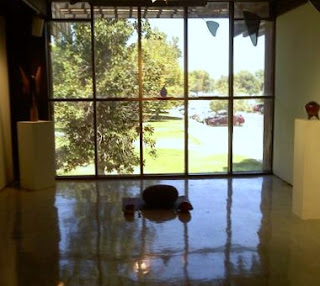
CSUB Dojo, Fine Arts 201
GIVE YOUR BRAIN A BREAK in the middle of the week in the middle of the day, Wednesdays – 11:45 am – 12:45 pm, beginning January 16.

Fine Arts 201 (the student gallery, aka the “stilt” building), California State University, Bakersfield.

All equipment (cushions, benches, chairs) supplied.

Monday, January 7, 2013

Introduction to Practice - 2 February 2013


The Zen Fellowship of Bakersfield will offer an introduction to Zen on Saturday, 2 February 2013, 8:00-11:30 am. 

Learn how to practice sitting concentration (zazen) and walking concentration (kinhin), with emphasis on posture, breathing, and attitude of mind. All equipment is provided. Dress in loose, comfortable clothing. 

$20 donation (students $10) includes traditional monk’s breakfast during introduction and weekly participation through end of February.

Reservations required. Space is limited.

For more information and reservations, email the director. For directions to the dojo, see our visit page.

Friday, January 4, 2013

A Talk by Grace Schireson - 10 January 2013

Zen Practice for Westerners—Really? 

What does Zen Buddhism have to offer the Western mind, heart and lifestyle? 

A Talk by Abbess Myoan Grace Schireson

Thursday, January 10 @ 5:30
Student Union Multi-Purpose Room

Hosted by the Institute for Religion, Education, & Public Policy (IREPP) at CSUB and The Interfaith Student Alliance at CSUB


Abbess Myoan Grace Schireson
Abbess Myoan Grace Schireson is a Dharma teacher in the Suzuki Roshi lineage empowered by Sojun Mel Weitsman, abbot of Berkeley Zen Center. She has also been empowered to teach koans by Keido Fukushima Roshi, the late abbot of Tofukuji Monastery in Kyoto, Japan. Grace is the author of Zen Women: Beyond Tea Ladies, Iron Maidens and Macho Masters. She is head teacher of the Central Valley Zen Foundation and has founded and leads three Zen groups and a Zen retreat center in California. She is president of the Shogaku Zen Institute, a Zen training seminary to help Zen students serve their communities. Grace is also a clinical psychologist s[ecializing in women and families. She has been married for forty-four years and has two grown sons and four grandchildren.

Generously supported by Prof. Jacquelyn Kegley, Chair of Philosophy & Religious Studies; the Zen Fellowship of Bakersfield; and Barbara Fleming, Chair Emeritus of Nursing

Flyer in pdf format.